

Today, April 22, is The Earth Day. It was first celebrated in 1970 to draw attention to environmental pollution and this year the theme of The Earth Day is “Invest in Our Planet”. In this context, we would like to talk about the activities of our association in the fields of global climate crisis, environmental pollution and sustainability.
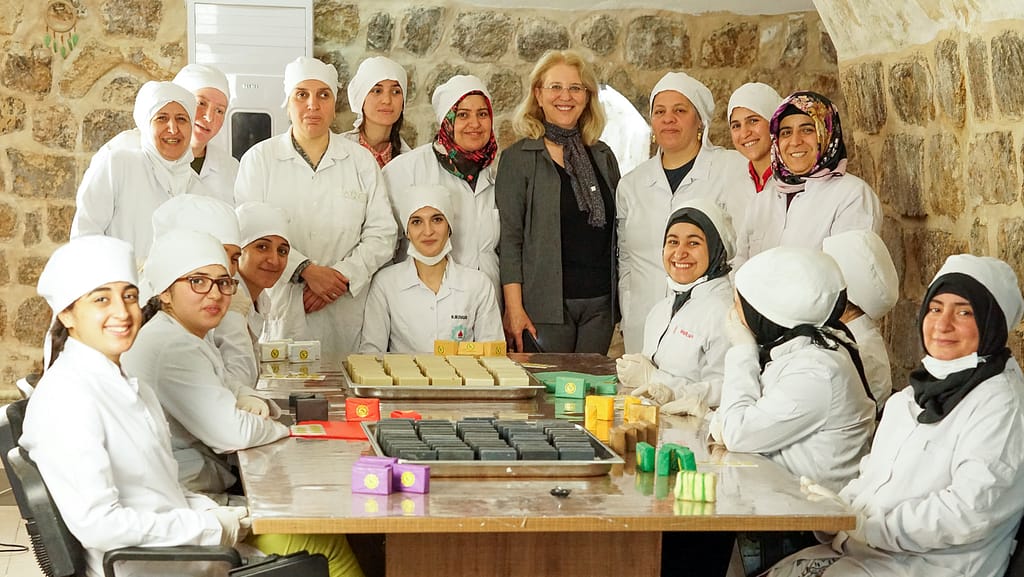
Within the scope of the SDG13: “taking urgent action to combat climate change,” We are working to integrate climate actions into policies, strategies, and planning to eventually mainstream climate actions as a cross-cutting issue within all our programs. Our project, “Local Women’s Socio-Economic Empowerment in Mardin, Şanlıurfa, Kilis, and Çorum,” is an excellent example of our organization’s climate actions.
Since the inception of the Women’s Socio-Economic Empowerment Program, through the cooperation between RET Germany, LEAP, and the women artisans, we have been trying to reduce our carbon footprint and achieve zero-waste production at every step through the production process. We aim to minimize our climate impact and support green production methods. To achieve this, all of the different vocational ateliers within the Women’s Socio-Economic Empowerment Program share common principles and climate actions:
Artisanship and Solar Panels
The ateliers value traditional artisanship. Our production methods focus on handmade artisanship instead of mass production while limiting our dependency on industrial machines, electricity, and fuel.
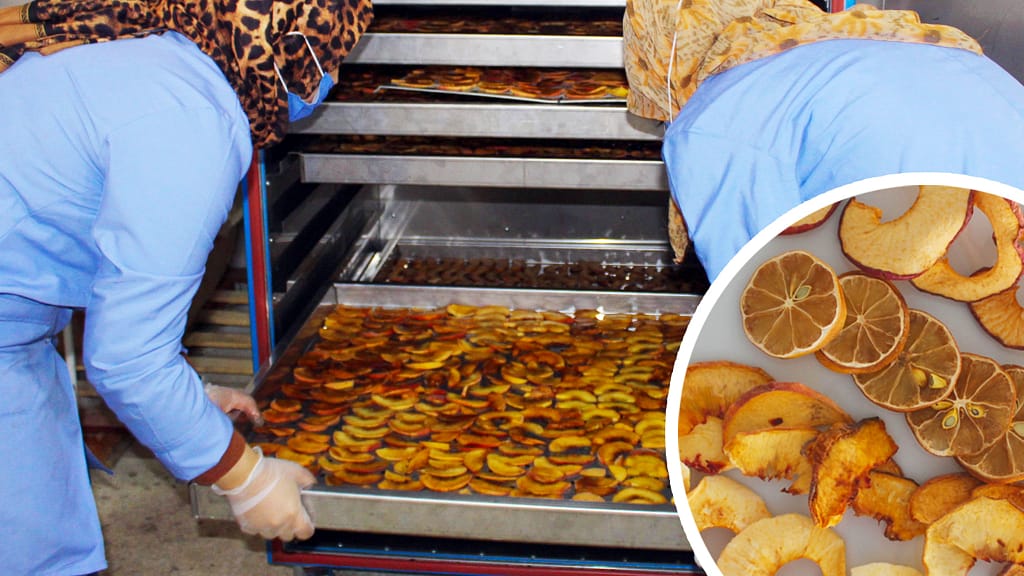
One of the essential steps LEAP took for this goal was to opt for solar drying panels for the vegetable & fruit drying atelier of LEAP in Şanlıurfa. As a traditional food preserving method, the fruits and vegetables are traditionally dried under the sun by many households in Şanlıurfa. However, this drying method causes the fruits and vegetables to be exposed to various contaminants (polluted air, insects…etc.); therefore, traditional models cannot guarantee hygienic drying and safe consumption. It is also only limited to summertime, which would lead to a decrease in the production capacity of the atelier. Therefore, industrial drying machines requiring high energy usage are commonly used to commercialize dried vegetables and fruits. For greening this atelier’s production methods, LEAP, in collaboration with Harran University Food Technology Department, came together and jointly designed a simple, cost-effective, and easy-to-use solar-powered drying machine. With its simple design, this machine was also accessible for the women participants who were newly learning their vocation. The machine allowed the women to use only solar power during the production process to dry the vegetables and fruits hygienically in a controlled environment all year round.
Opting for Echo-Friendly Materials and Zero Waste Packaging
The Ateliers have been limiting their plastic or petrol-based materials for packaging. Instead, Leap Natural offers a variety of packaging solutions that are sustainable, biodegradable, and environmentally friendly, trying to achieve zero-waste, including:
- Glass jars for liquid hygiene & cosmetic products produced in Mardin Natural Soap Workshop. After usage, glass jars can be upcycled by the customers.
- Biodegradable raw craft papers and boxes
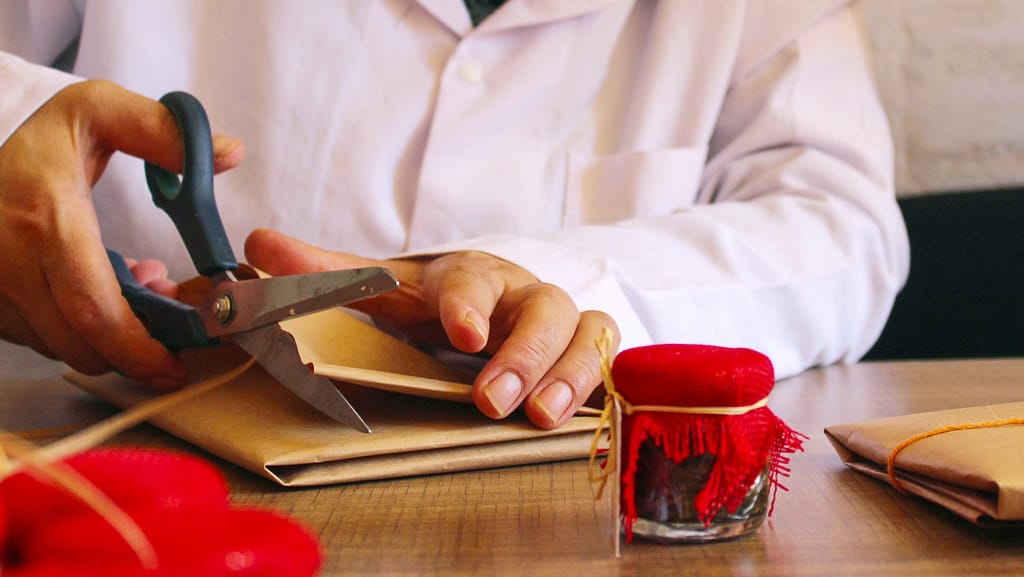
Throughout its program, LEAP also provides women with Product Development Training Sessions. During one of these sessions in our Şanlıurfa Dried Vegetables and Fruits Atelier, LEAP and the women participants discussed zero-waste solutions for the product packaging. The women came up with the idea of placing the products in reusable cotton pouches/bags. They networked with the women from LEAP’s Mardin Atelier, who have been creating block printing and natural dyeing on textile products, and collectively designed the pouches. Leap Natural received positive feedback from its customers on the bags made from natural materials and its endeavors to achieve zero-waste production and distribution.
Natural Raw Materials
Women artisans of the atelier design and develop natural and eco-friendly products. None of Leap Natural’s products contain chemicals or additives. For example, instead of using microplastics in Leap Natural’s hygiene and care products, women artisans of Natural Soap Workshop chose natural alternatives such as unrefined salt (procured from local Mucur Women’s Cooperative), lavender buds or organic charcoal powder, which are equally effective.
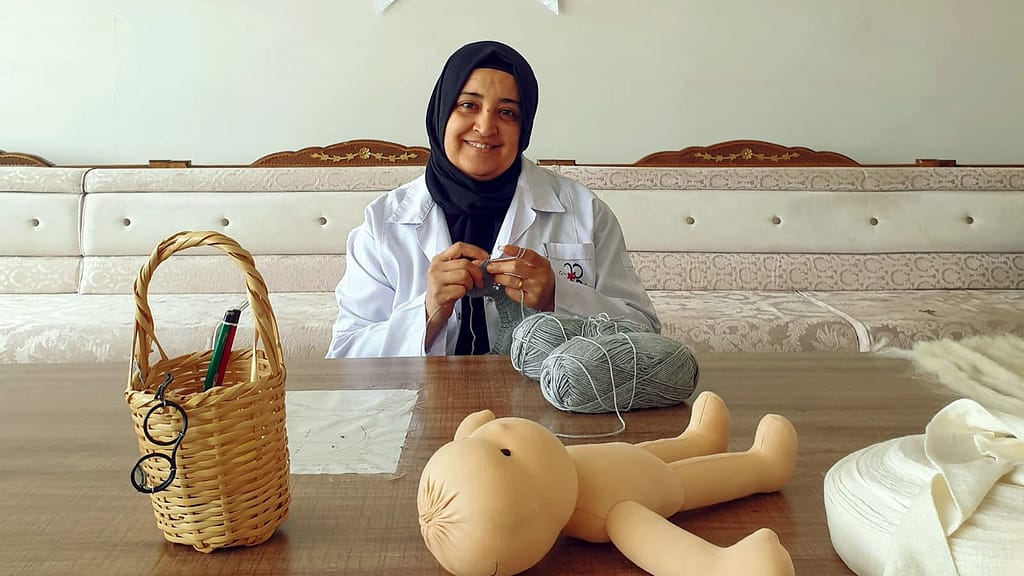
Another example, instead of using artificial fiber for the Dolls’ fillings, women artisans of Natural Dolls Atelier use %100 natural, locally sourced wool fillings, which is also a healthier and hypoallergenic option for children.
Locally Procured, Locally Produced
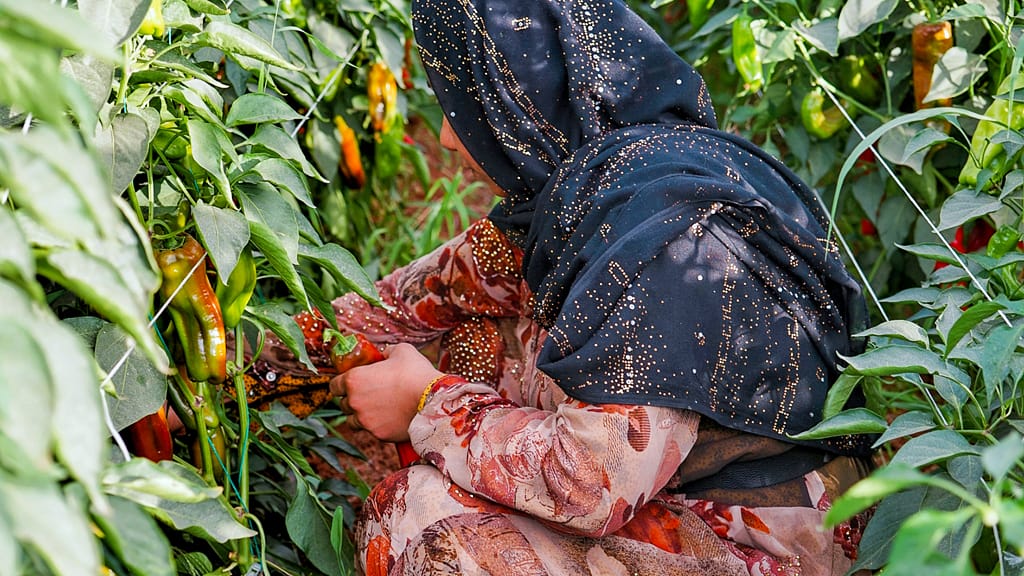
To reach locally sourced materials, especially for fruits and vegetables grown with zero agricultural chemicals or pesticides, we created a map of local farmers, women farmers, and small-sized family farms/businesses and started to meet the producers. Instead of procuring materials from the wholesale market halls, RET opted to reach directly to the farmers at the local levels to carry out a local procurement process. This way, we can support the local economy and small businesses (including women-led businesses) and minimize the distance for transportation within the supply chain, hence creating a light supply chain to reduce our carbon footprint. For example, the vegetables and fruits are procured directly from these villages and farmers. We are also supporting farmers and women farmers with the distribution of Natural raw materials- no pesticides, supporting less costly/ natural and organic fertilizers.
Awareness Raising on Responsible and Ethical Consumption habits
Through social media, we also invite our followers and customers to think about the life cycle of the products by sharing stories on the product’s raw materials, the artisan women behind each product produced, and the eco-friendly production techniques and methods. We aim to raise the awareness of our customers and followers of the importance of reducing waste, especially food waste, and encouraging them to buy local products from local small businesses produces.
We are also raising awareness about harmful ingredients and promoting natural ingredients as an alternative.
Partnerships for a Green Future
LEAP and Leap Natural collaborate with different actors, including private and public sectors, to jointly create climate-related initiatives
LEAP’s collaboration with Espressolab is an example of collaborative climate action between a women’s co-operative and private sector company. Espressolab is a global and local coffee chain with more than 65 stores in Türkiye and worldwide. Through our collaboration, the women artisans of our Mardin Natural Soap Atelier have been utilizing coffee grounds used in Espressolab to make soaps. In addition, the women also upcycle the coffee sacks into specially designed pouches and bags. Espressolab’s coffee shops sell soaps, pouches, and bags. This partnership contributes to the socio-economic empowerment and sustainable income generation of artisan women. Still, it also follows a zero-waste approach through recycling and upcycling materials that would otherwise be wasted and invites customers to explore the circular economy and repurposing of materials.
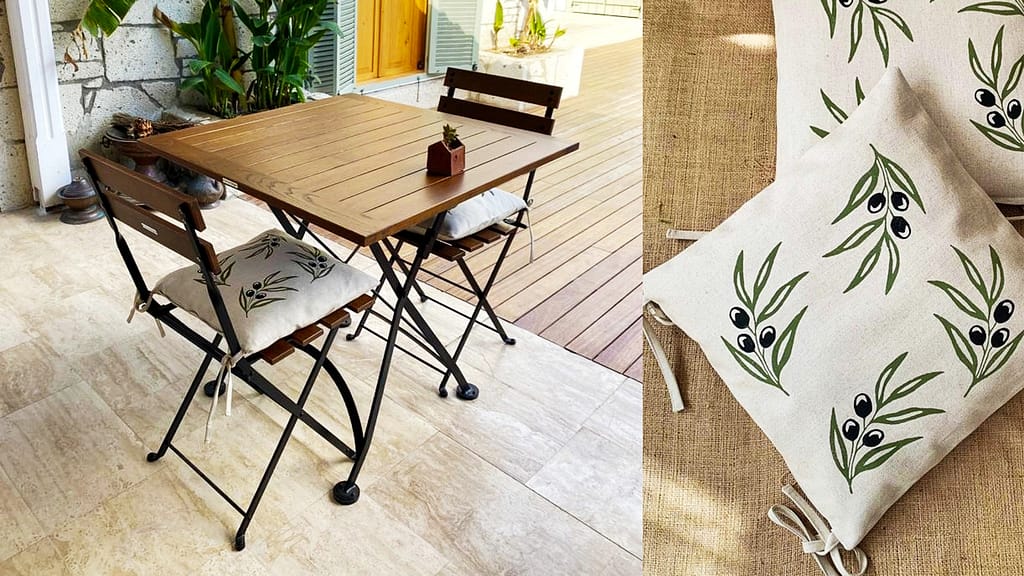
LEAP further put its zero-waste practice through collaboration with Diversey. Diversey is a global company with a branch in Türkiye providing cleaning and hygiene products serving customers in different sectors such as hospitality and healthcare. With the joint upcycling project and partnership of LEAP and Diversey, the women artisans of Mardin Block printing and Natural Dyeing Workshop have been upcycling discarded textile products due to user errors, such as towels and sheets from Hilton and Marriott Hotels and creating newly designed products and put them into sale again in the same Hotels.
LEAP further put its zero-waste practice through collaboration with Diversey. Diversey is a global company with a branch in Türkiye providing cleaning and hygiene products serving customers in different sectors such as hospitality and healthcare. With the joint upcycling project and partnership of LEAP and Diversey, the women artisans of Mardin Block printing and Natural Dyeing Workshop have been upcycling discarded textile products due to user errors, such as towels and sheets from Hilton and Marriott Hotels and creating newly designed products and put them into sale again in the same Hotels.