

Refugees in Türkiye face many challenges, from shelter to food, to providing for their families’ needs. The limited working knowledge of the Turkish language serves as an impediment to Syrians under temporary protection (SuTP) accessing income generation opportunities to reduce their multidimensional vulnerabilities. Hence, 3RP 2019-2020 emphasized language training, with the plan recommending “complimenting vocational training and entrepreneurial support with training on other critical skills such as Turkish language courses.”
Limited language proficiency also prevails against SuTPs knowing their rights and accessing much-needed public services in different fields, including education and health. Language is particularly a problem for female refugees who have trouble integrating more into social life. Despite the significant human and financial resources allocated in response to the Syrian crisis, specifically in the fields of capacity building, awareness-raising sessions, livelihood supports, and/or social cohesion programs, little have been dedicated to bridging the language barrier. Bridging the language barrier is necessary to ensure better refugee integration and service accessibility, in tandem with improving access to the labor market.
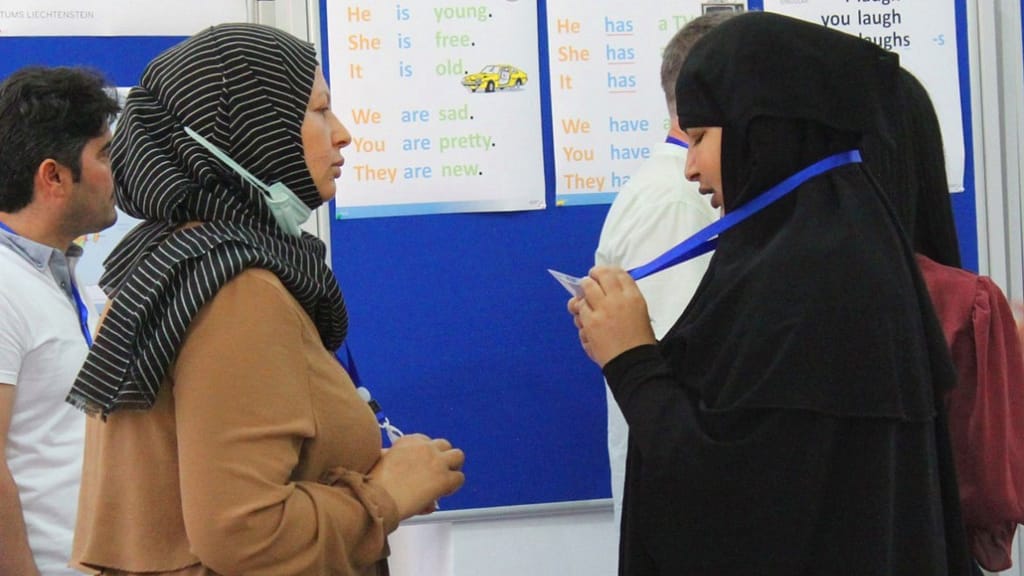
This project will enhance social cohesion by facilitating the communication between two communities by establishing trust, value sharing, and social integration, thanks to offering language learning programs. In addition to that, refugees will rely on others/translators for their daily tasks because of the language barrier. Through this program, refugees will be able to benefit from social services like health or education or legal services more timely and efficiently.
This project is implemented in consortium with RET International (INGO) until December 2022 in Türkiye.