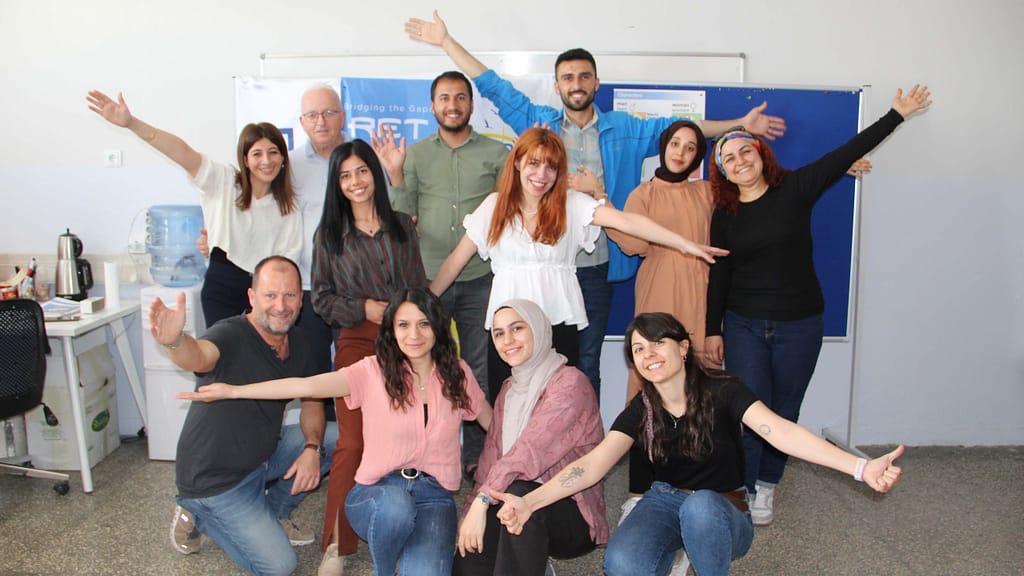
Refugees in Türkiye face many challenges, from shelter and food to providing for their family’s needs. The limited working knowledge of the Turkish language prevents refugees from accessing income-generating opportunities. The limited language proficiency also prevails against refugees learning about their rights and accessing much-needed public services in different fields, including education and health. Language is particularly problematic for female refugees with trouble integrating more into social life. Despite the significant human and financial resources allocated to the Syrian crisis, specifically in capacity building, awareness-raising sessions, livelihood supports, and/or social cohesion programs, little has been dedicated to bridging the language barrier. Bridging the language barrier is necessary to ensure better refugee integration and service accessibility and improve access to the labour market.
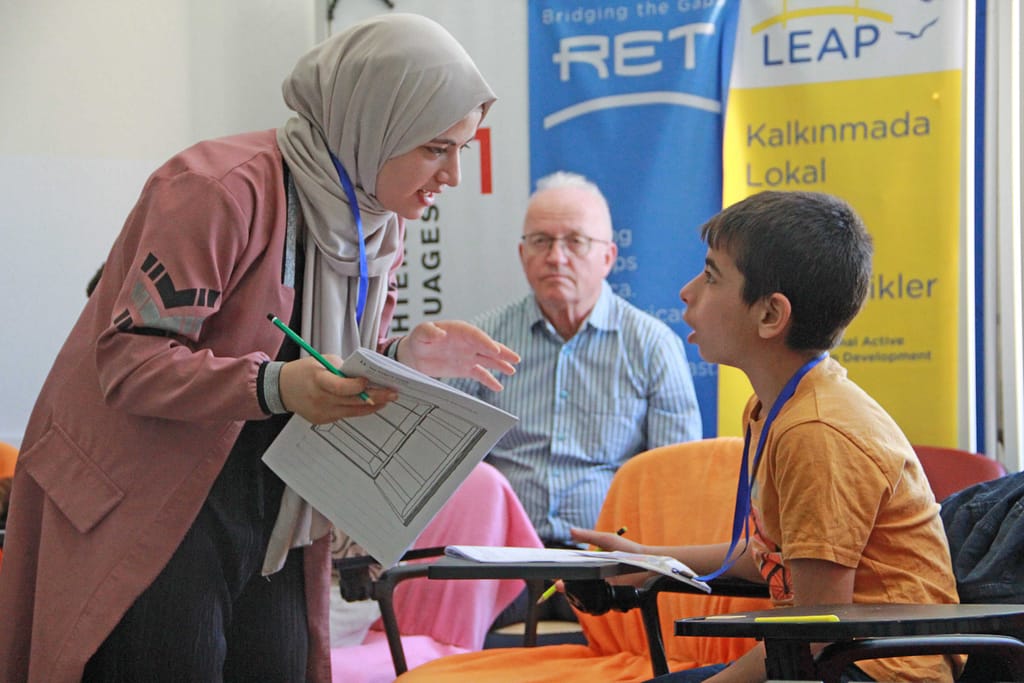
The “Turkish and English Language Learning Programme as a Tool for Empowerment and Social Cohesion, Phase II” project aims to enhance social cohesion by facilitating communication between the refugee and host communities, thus promoting social integration. The project will address one of the many reasons for the social exclusion of refugees from the public sphere: the language barrier. The Turkish language courses will help participants learn Turkish, integrate into the community independently, and promote social, educational, and professional opportunities. The English language courses will enable participants to break prejudices by offering a venue for peaceful coexistence amongst the refugee and host community members.
RET builds on experience from the project’s first phase, implemented in localities in Ankara, Samsun, Mardin, and Şanlıurfa between 2021 and 2022. RET conducted an impact assessment with the participants who completed the language courses in all project locations. The evaluation revealed that Turkish language courses improved social interaction, social cohesion, participation in public life, and access to public services. It increased social cohesion amongst the refugee and host communities by eliminating tensions arising due to miscommunication or/and language barriers. Participants reported that after completing the courses, they could engage in simple discussions with their Turkish counterparts, including their neighbors, and conduct daily tasks more efficiently, such as shopping, taking hospital appointments and visiting a physician, receiving couriers, or filling simple forms.
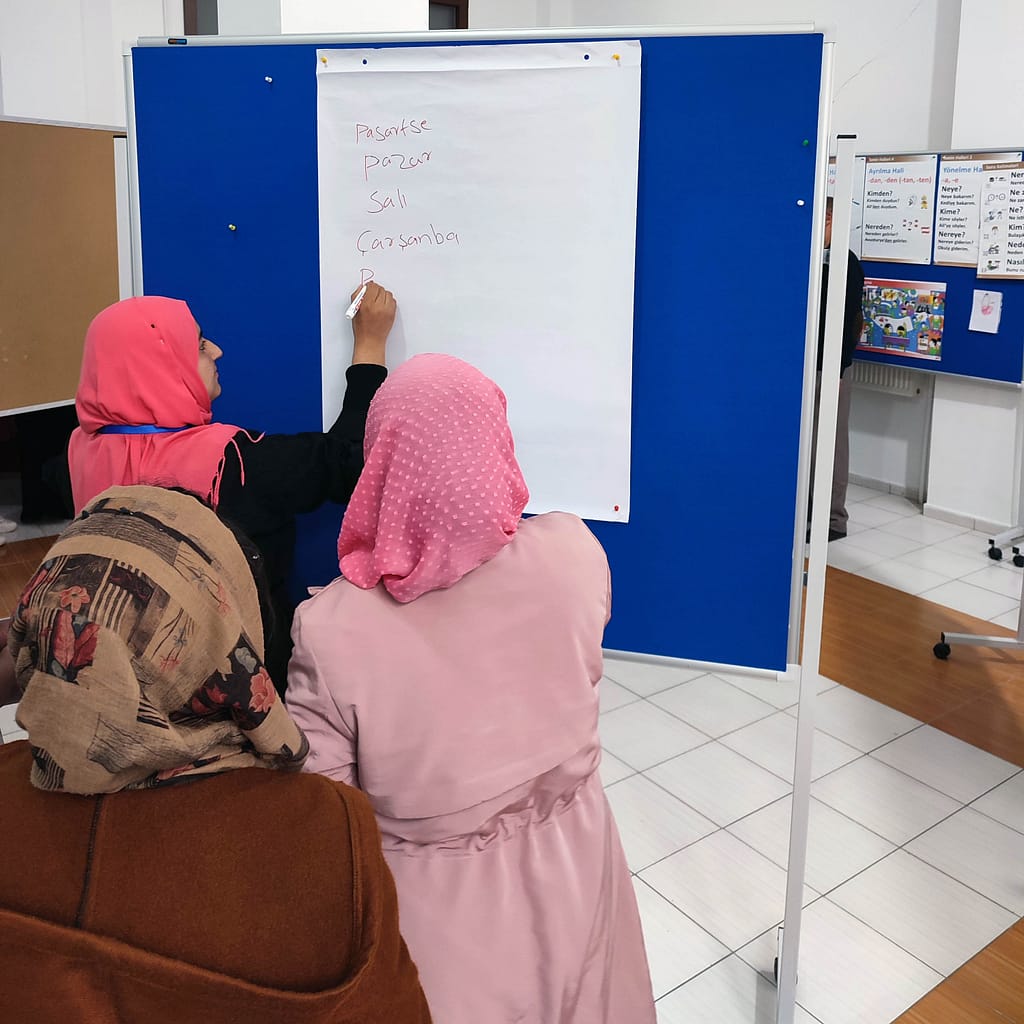
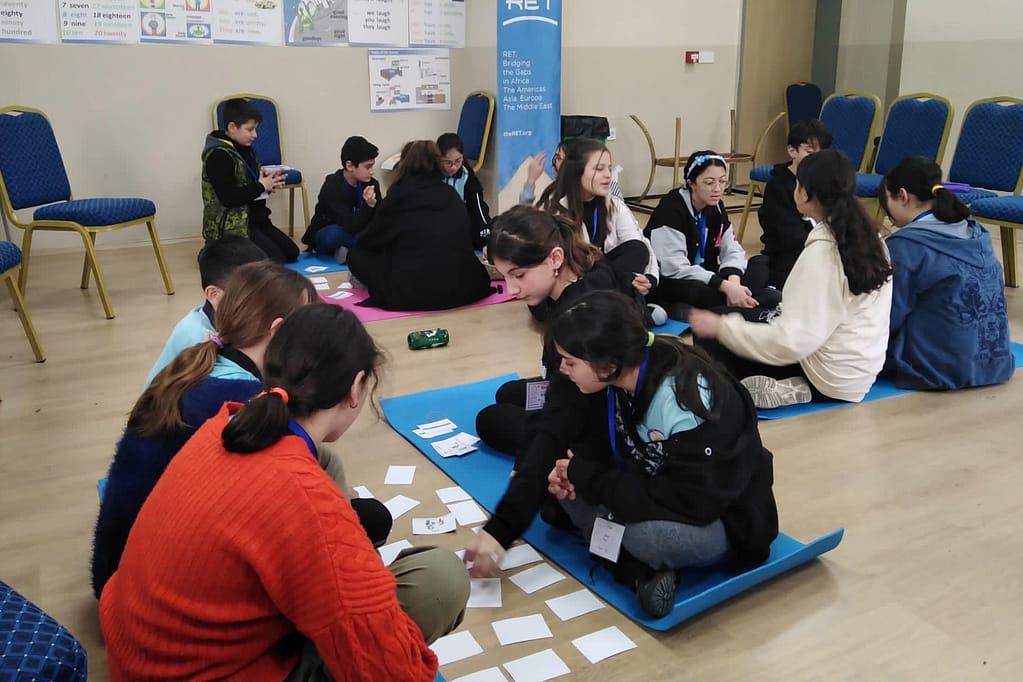
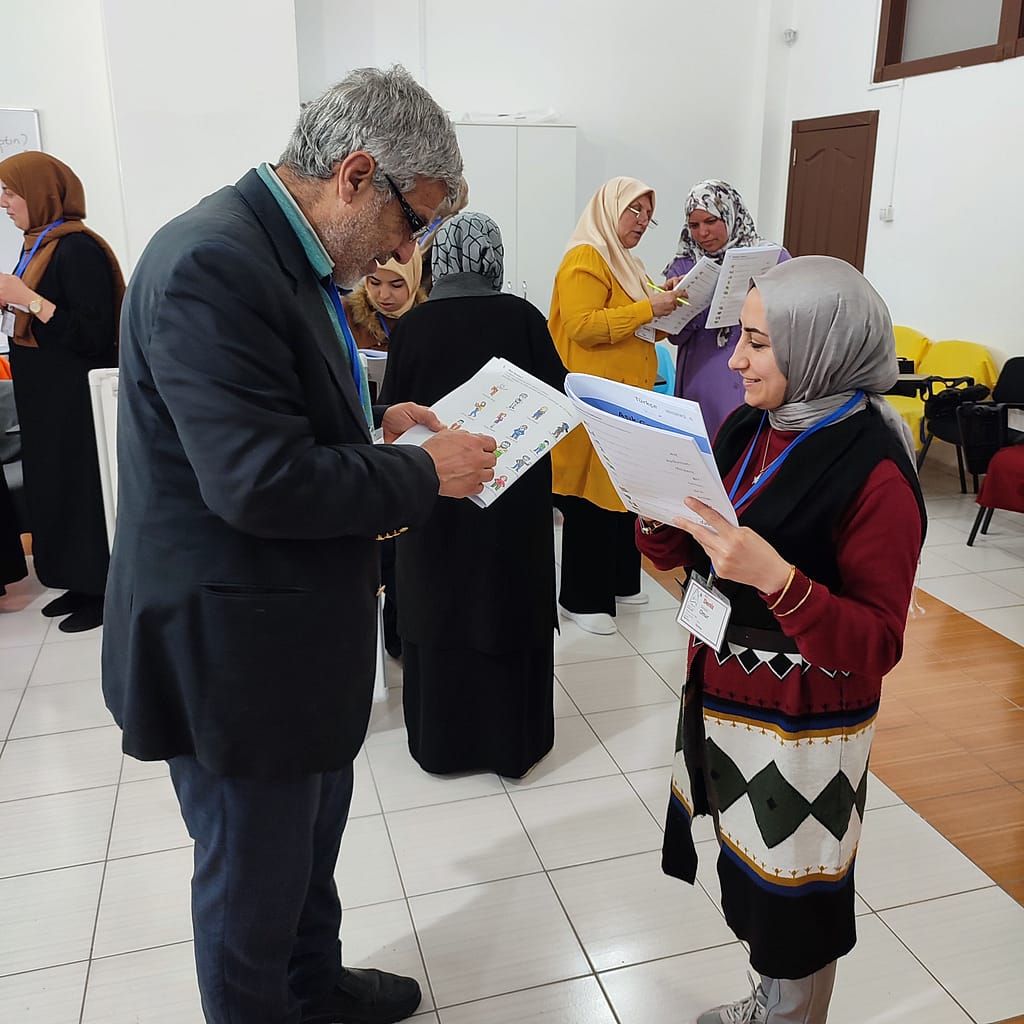
In the project’s second phase, RET will provide Turkish language learning classes to Syrians and non-Syrian refugees in Ankara, Samsun, Mardin, and Şanlıurfa. The classes will help refugee participants increase their communication skills and support them in accessing the labor market, public and private services, and their social life.
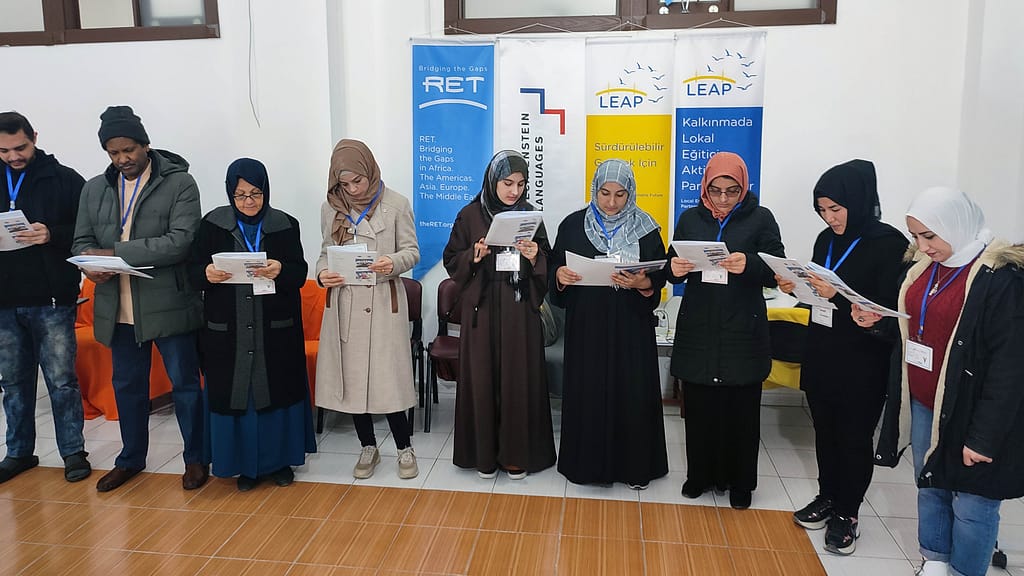
RET will also conduct English language courses targeting the refugee and host community members to facilitate integration into the educational and/or professional spheres. Moreover, the English courses allow members of both communities to attend courses jointly and overcome biases. The English courses aim to enhance mutual understanding, ensure peaceful interaction between refugees and the host community members, and support the participants in improving their English language skills for better economic opportunities.
This project, implemented between January 2023 and December 2025, is implemented by RET, in partnership with LEAP in Turkiye.